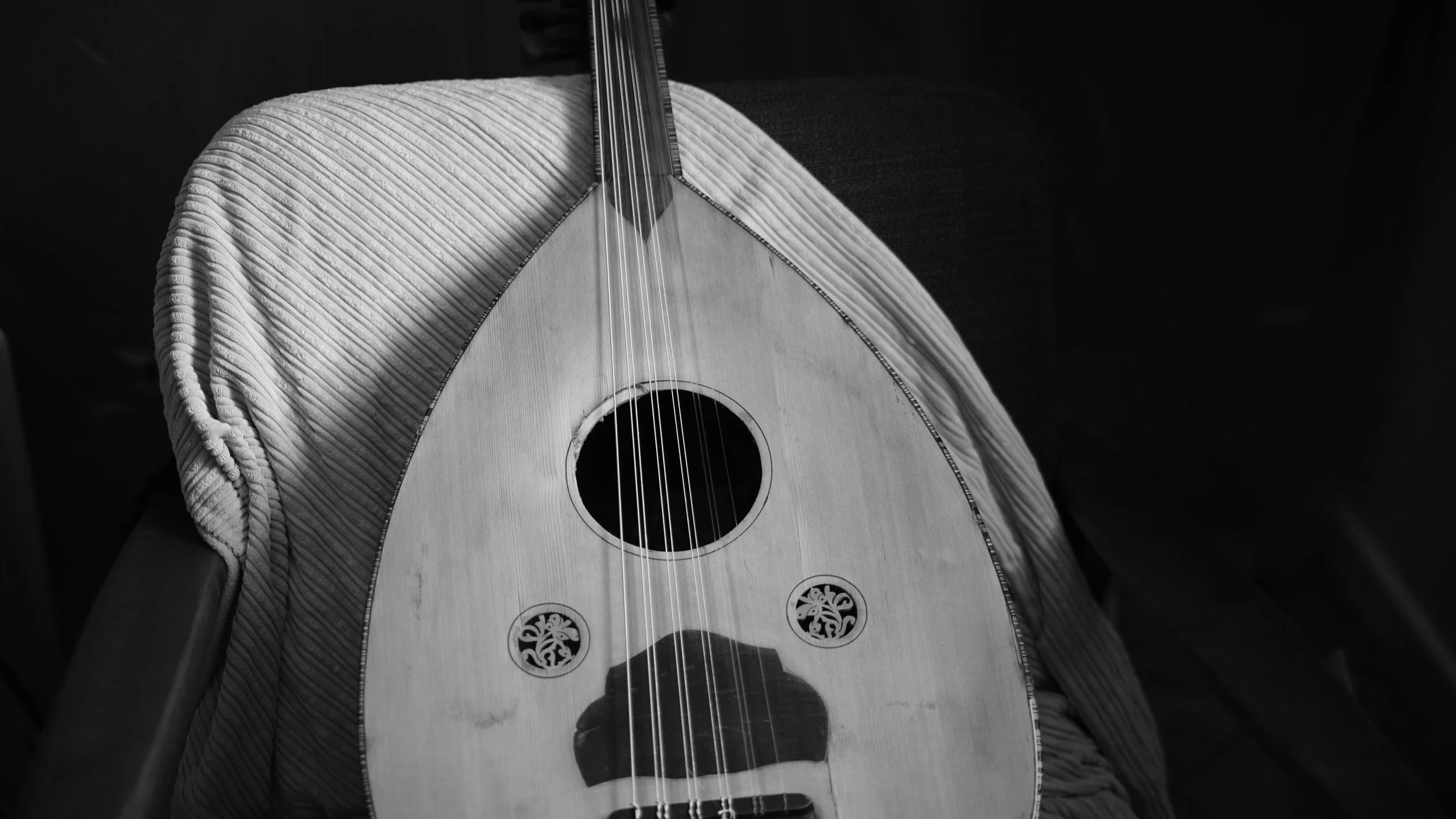
OUD & ARABIC MAQAM ONLINEWhether you’re a beginner or already have some experience, each one-to-one lesson is tailor-made to your goals and preferred oud style.
Book a free video chat.
Together we’ll discuss: your oud and strings, the styles of playing you like, and your musical experience.
-
£18 / 30 mins
£27 / 45 mins
£36 / 1hr
-
These are online one-to-one lessons.
Age 18 +
Oud beginners welcome!
All lessons taught in English.
No, I don’t teach singing.
But if you already play another instrument, and have a good ability, you’re welcome to study the maqams.
-
Work with Julian. A trusted former teacher in the music department of King’s College London, and oud instructor of seven years at the Arab British Centre. Full bio below.
WHAT HAPPENS IN AN OUD LESSON?
Lessons usually begin by focusing on playing techniques to get you warmed up, then we’ll move on to the piece, song, or improvisation you’ve been working on…
For an in-depth discussion, watch the video with oud teacher Julian.
From a studio recording, Julian playing a free improvisation in maqam shawq afza, emphasizing a jins of kurd, in the modern solo style.
WHAT TO EXPECT?
Most students like to start with an introduction to the nine foundational maqams.
Al-Maqamat are a collection of ‘modes’ - musical scales/colors - shared by traditional, classical, contemporary and popular Arabic musics.
Once you’ve become comfortable with the basics, you’ll get to see a variety of genres : popular songs of the greatest stars like Umm Kulthum, Muhammed Abdu & Fairuz ; traditional songs like the muwashshahat & qasa’id ; classical instrumental forms like the samai, bashraf, longa & dulab ; as well as learning to improvise in free irtijali & structured taqasim forms.
If you love the classics and tarab - a feeling of being moved by beautiful maqam and songs - or want to focus on modern ta‘biri- expressive - artistry, this tailor-made approach recognizes that ‘you’ are the music. So whilst there’s a shared tradition of materials, everyone’s journey will be meaningfully different.
Please note that the maqams will be presented in their Arabic forms, which are different to Turkish/Ottoman, Persian, or other mugham traditions.
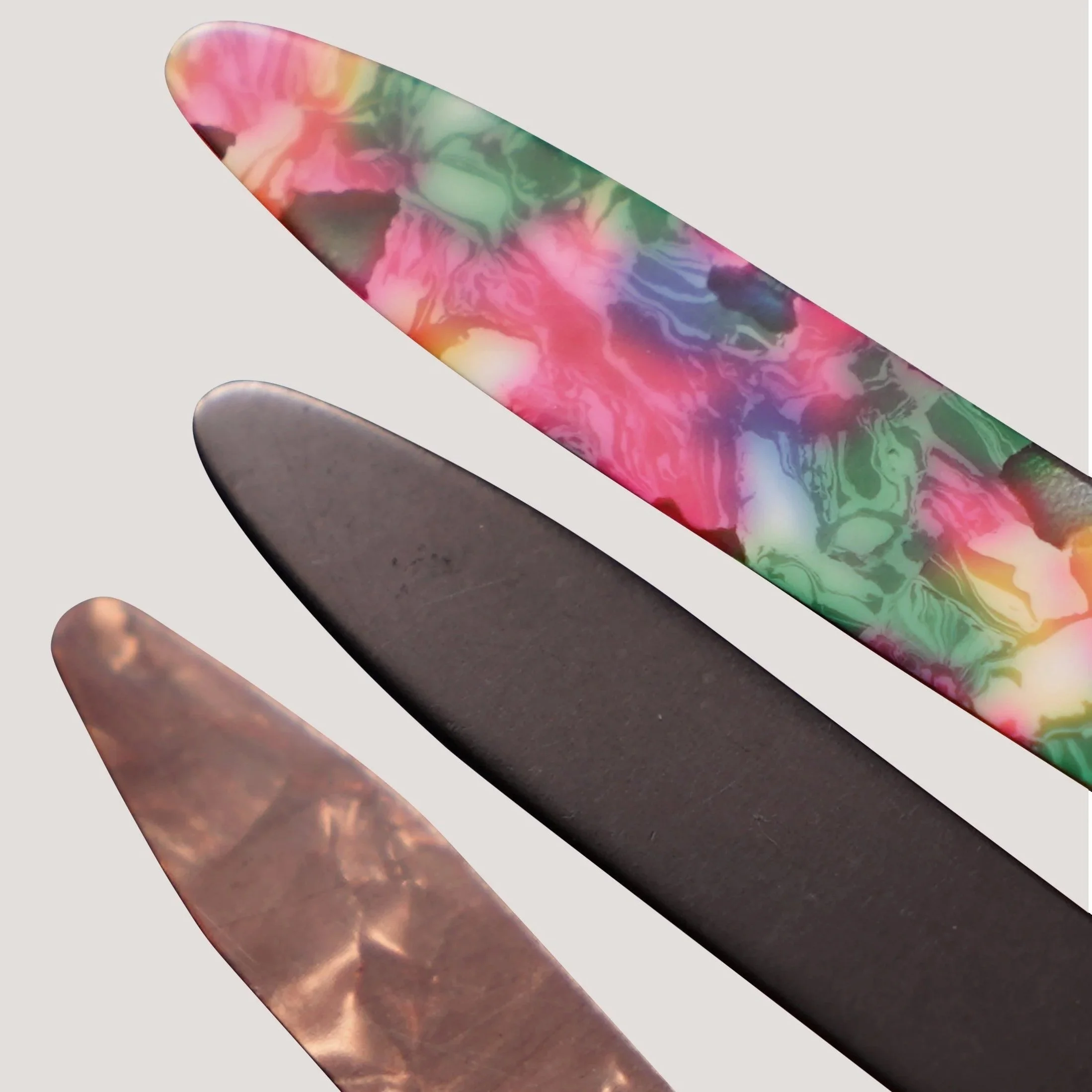
- Rishas (Oud Picks).
OKAY, SO WHAT DO I NEED?
Oud students must be able to hold a regular Arabic or Turkish oud.
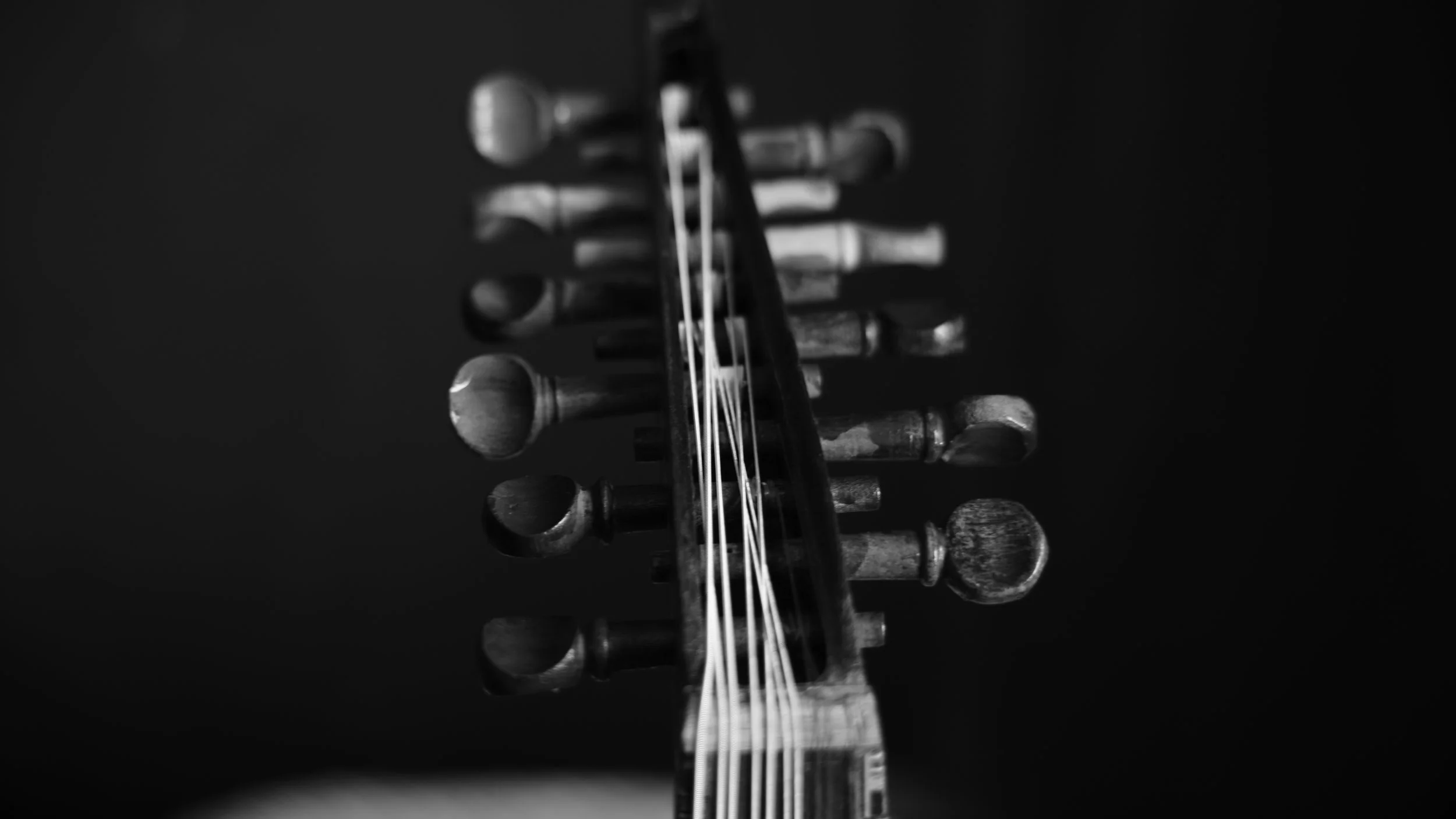
Your oud should have a minimum of 9 pegs/strings, 11 (or 12) is preferred, this is the standard.
Ouds should be strung and tuned to an Arabic tuning - either the ‘Arabic’ Do-Do tuning (C, FF, AA, dd, gg, cc), or the ‘Iraqi’ Fa-Fa tuning (F, AA, dd, gg, cc, ff). For more info, get in touch.
You will need a ‘risha’ (oud pick). Choosing A Risha.
You’ll need to receive/view PDF documents whilst maintaining a video call, ideally on a second device.
You’ll also need to run a metronome at the same time as the video call and PDF. (This may be possible via a free app, or you may need to get a metronome, depending on your setup).
Half an hour a day practice is recommended.
You may want a foot rest to help secure the oud.
Most devices and video call apps these days have some level of voice isolation, muting or reducing the oud as ‘background noise’. If you could become familiar with your settings, ready to turn the isolation sensitivity down or off if needed, it would be a very fine thing indeed.
AM I GOING TO MISS ANYTHING BY LEARNING ONLINE AND NOT IN PERSON?
Not unless you like traffic.
The great thing about the oud is that we can both play looking at each other; it’s very easy to show where the fingers go. Musically, it’s exactly the same as an in-person lesson.
And there are easy fixes for the two areas where being in the same room might usually help: (i) setting the oud up correctly and (ii) playing together.
Setting the oud up -
You’ll receive PDF instructions that have been tested over the years, clearly detailing what strings you need, where to find them, and where they need to go on the instrument i.e. whether you’re left-handed or right-handed etc. When you need to change your strings (not a regular thing) there’s also a demonstration video (on the YouTube channel) showing the fiddly bits.
I usually encourage potential students to try and tune the oud whilst we’re on the free video call together. With a free tuning App, clear instructions, and with me listening along, it’s easy enough. And then you’ll know how to do it for yourself. I’m always happy to answer your questions.
Playing together -
Due to the short internet delay, we can’t play together perfectly in time (though we can get very close). So, I’ll send you recordings that you’ll then have to practice with. If you can play with these MP3s during the class, ideally on your second device, I can hear how you’re doing at keeping time. A metronome or free metronome App is also good for this.
As I say, everything else about online lessons is exactly the same. And if the connection one day is so poor that we can’t finish the class, which is rare, we’ll simply reschedule.
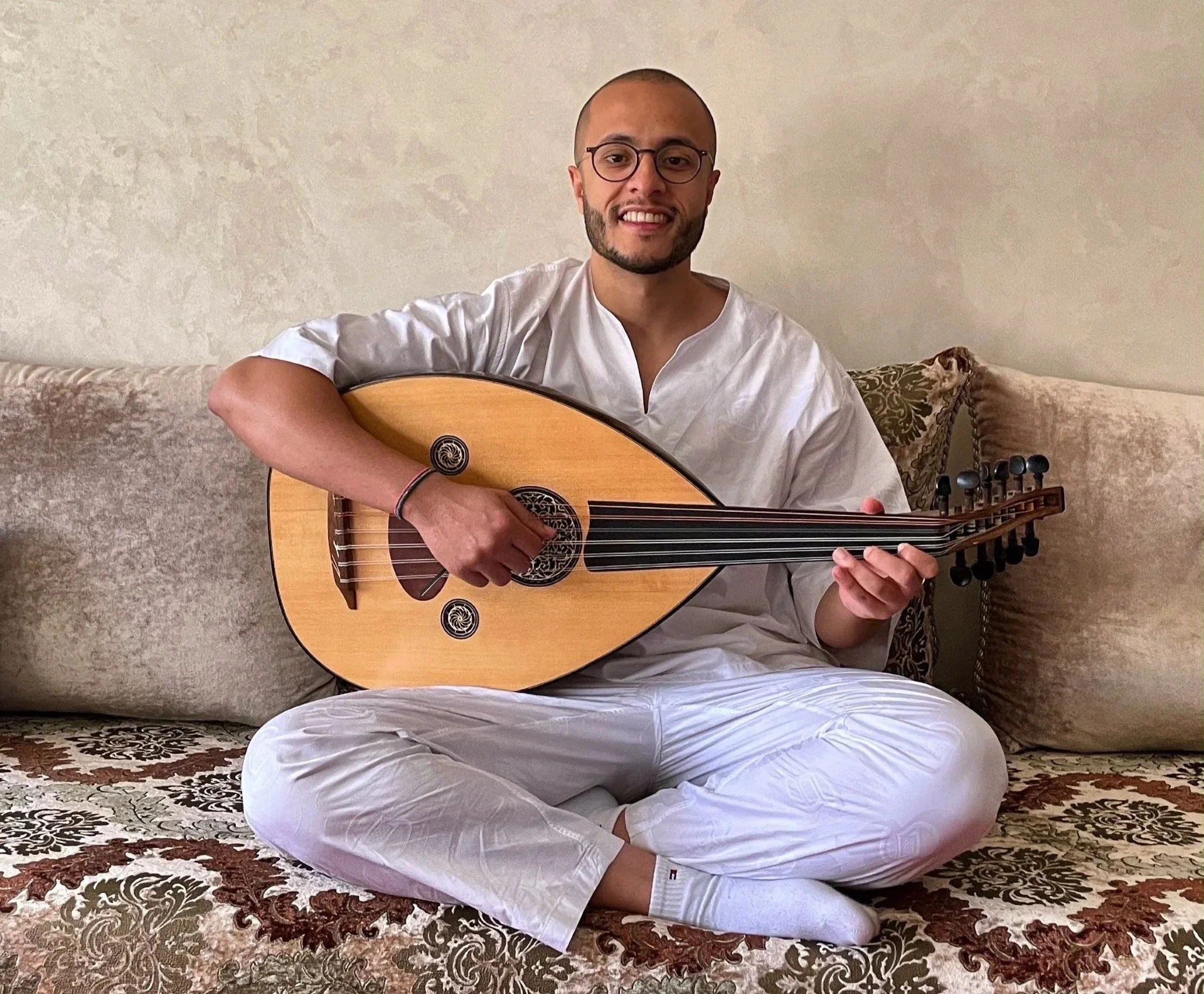
- Hamza Bellahsen, London
HAMZA’S EXPERIENCE
“The transformation has been incredible. Despite starting from scratch, I am now able to read sheet music confidently, which has opened up a whole new world of music for me. The biggest change, however, is that I’ve reached a level of skill and understanding where I can truly enjoy playing on my own. Julian has a gift for breaking down complex concepts, and his attention to detail—even over a screen—has given me a solid foundation I never thought possible”.
”I first met Julian in group classes at the Taqasim Music School in London. When the pandemic hit I was a complete beginner, with no prior experience in any musical instrument. What really set him apart from other online options was his ability to offer well-structured, fun classes that could be completely tailored to my specific interests, making the move to virtual lessons feel seamless and personal.”
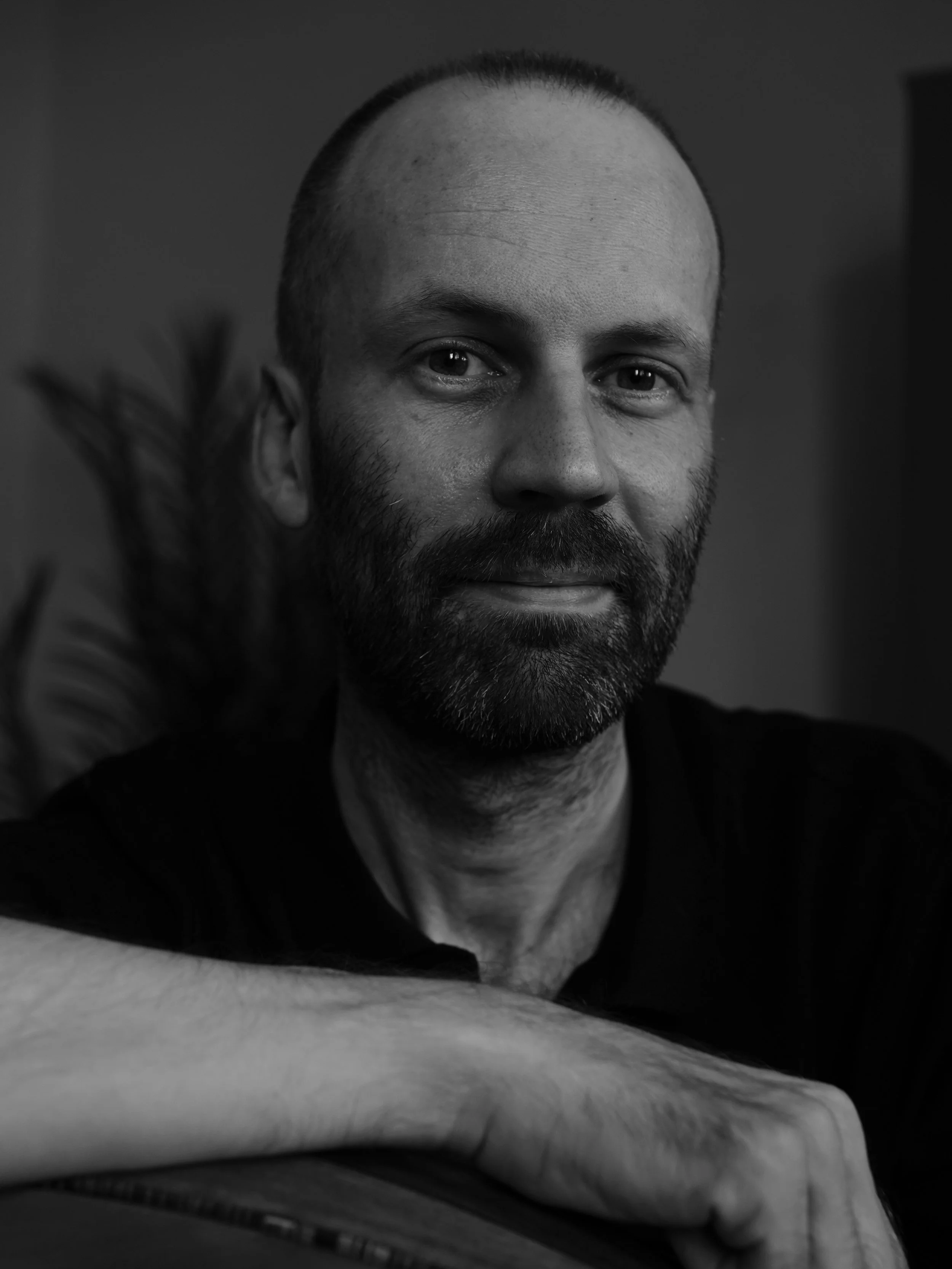
- Oud teacher, Julian Harris
ABOUT JULIAN
Teaching since 2012, Julian spent seven years as an oud teacher at the Arab British Centre, and also taught undergraduates as a seminar leader/examiner in the music department at King’s College London, with subjects including: the maqamat, music of the Middle East and South Asia, Ethnomusicology and Sound Studies.
He has two areas of specialty in oud performance and composition: firstly, the modern solo style of oud, resulting from eight years of intensive study with Iraqi oud master Ahmed Mukhtar in London. During his PhD research period this was further enriched by time learning with Palestinian player Adel Salameh, and fieldwork in Dubai, observing live sessions in top industry studios, interviewing renowned composer Khaled Muhammed Ali and prominent producer Shakir Hassan about their creative processes, (and also bumping into Khaled al Sheikh recording his new oratorio!).
Since then, Julian has fallen in love with the older tatribi style of oud playing from 1920s and 1930s Egypt, a style as iconic and influential in its day across the region (think Umm Kulthum) as the modern Iraqi-inspired style is today.
Julian studied composition at the Junior Guildhall School of Music and Drama, then music at Cambridge (BA) and Oxford (MPhil) universities, concluding with a PhD at King’s College London.
Prior to the pandemic he worked as a professional concert oud player, both as a soloist and in group projects, for example in 2019 with Lux Musicae London for their Secrets of Andalusia UK tour. For health reasons he’s had to stop in-person work these days, but enjoys the quality time that one-to-one online teaching allows.
5 min read: Julian’s Story
ENVIRONMENTAL IMPACT.
£1 from every lesson with Cotton Thistle Studio will be donated to supporting conservation projects.
The latest project donated to was for the restoration of seagrass habitats in the UK. For more info, please ask! (Note: Cotton Thistle Studio has no official partnerships in this regard).

- Willowherb